
Fiber-optic cable
Data travels as light through fiber strands.
FIBER BASICS
Instead of sending data over the same kind of copper cable used by traditional internet connections, fiber uses pulses of light through thin glass strands.
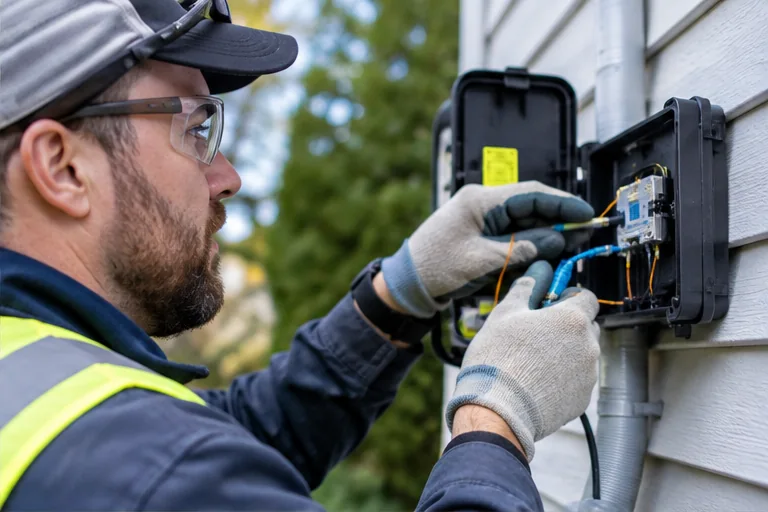
Data travels as light through fiber strands.
Useful for busy homes and large transfers.
Worth comparing if you work with big files.
Fiber-optic cables carry information using light. That lets a network move a lot of data efficiently over long distances.
For a household, the important part is less about the physics and more about the plan: the advertised download and upload speeds, the equipment and the monthly cost.
Most people notice downloads first—streaming video, loading pages, downloading games. But uploading photos, backing up a phone or sending work files uses the other direction of the connection.
Fiber services often offer strong upload speeds, making them worth comparing for remote work and creative projects.
No. Fiber brings the connection to the home; your router spreads it around the rooms. Distance, walls, device hardware and interference still affect wireless speed.
If one room struggles, start with router placement before assuming you need a faster plan.
1 Gig works well for plenty of households. 2 Gig makes sense for people who want more shared capacity or regularly move large files. Compare the options based on the busiest part of your day.
See the 1 Gig and 2 Gig prices, then complete your order on one page.